Oil In One
An e-commerce build for a GCC natural haircare brand — a clean, honest Shopify store with email automation and app integrations.
The problem
Oil In One had a loyal following for its zero-synthetics haircare, built largely through Instagram, and a Shopify store that was holding them back. It had been set up when they sold a single product. By the time we came in they had a full range and were positioning as premium, and the store still looked like a first attempt.
The conversion rate was the symptom, and the clearest cause was a mismatch. Their marketing was running in Arabic to an Arabic-speaking demographic, and every one of those people landed on an English-only store. On top of that the store was hard to navigate: no structure to help someone work out what to buy, no product pages built for a range rather than a single item, and none of the conversion signals a shopper expects before handing over money.
The category made it harder. Natural haircare in the GCC is crowded and competitive, and few brands in the region have a store that treats the product seriously. The differentiator was to let the product's honesty do the work and make the site feel as natural as what's in the bottle.

Rules
Arabic is not optional. The market is GCC-wide across Saudi, Oman, Qatar and the UAE, and the brand's marketing was already running in Arabic. The store had to meet that traffic in its own language, which means right-to-left layouts, not translated text dropped into a left-to-right design.
A range, not a product. The old store was built for one SKU. The new one had to hold shampoos, oils and accessories, with page types that could grow as the range did.
The client's team runs it. Everything had to be maintainable in-house, so the build came with training on Shopify, the apps and the day-to-day operation.
Shopify, kept. Already in place, and the right call. The app ecosystem around shipping, reviews and subscriptions does more for a store this size than a custom build would.
Photography that undersold the product. They had images, but they didn't reflect the quality of the range or the premium position they were moving into. I set the direction and advised their photography team before the reshoot.
Identity and structure
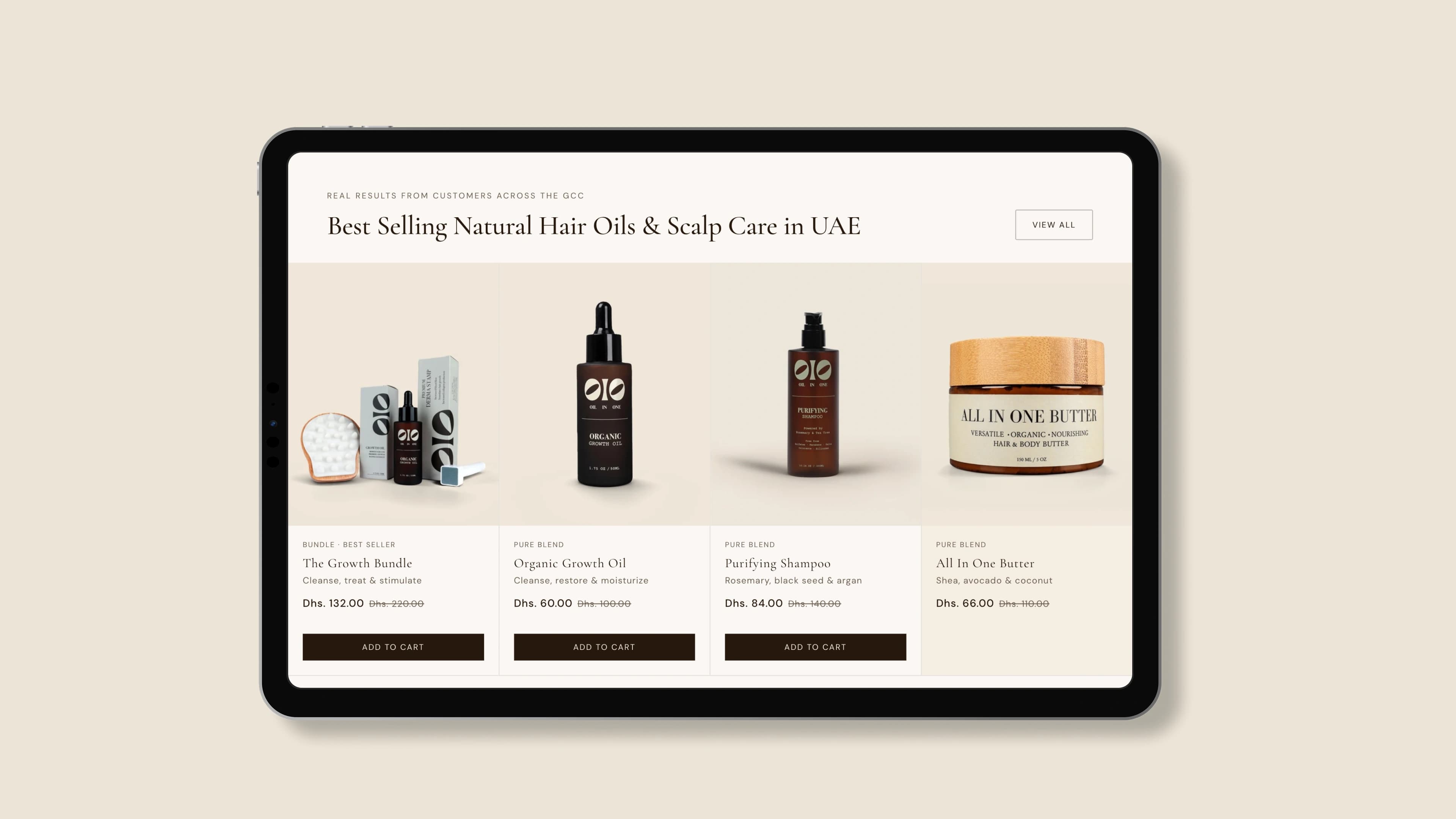
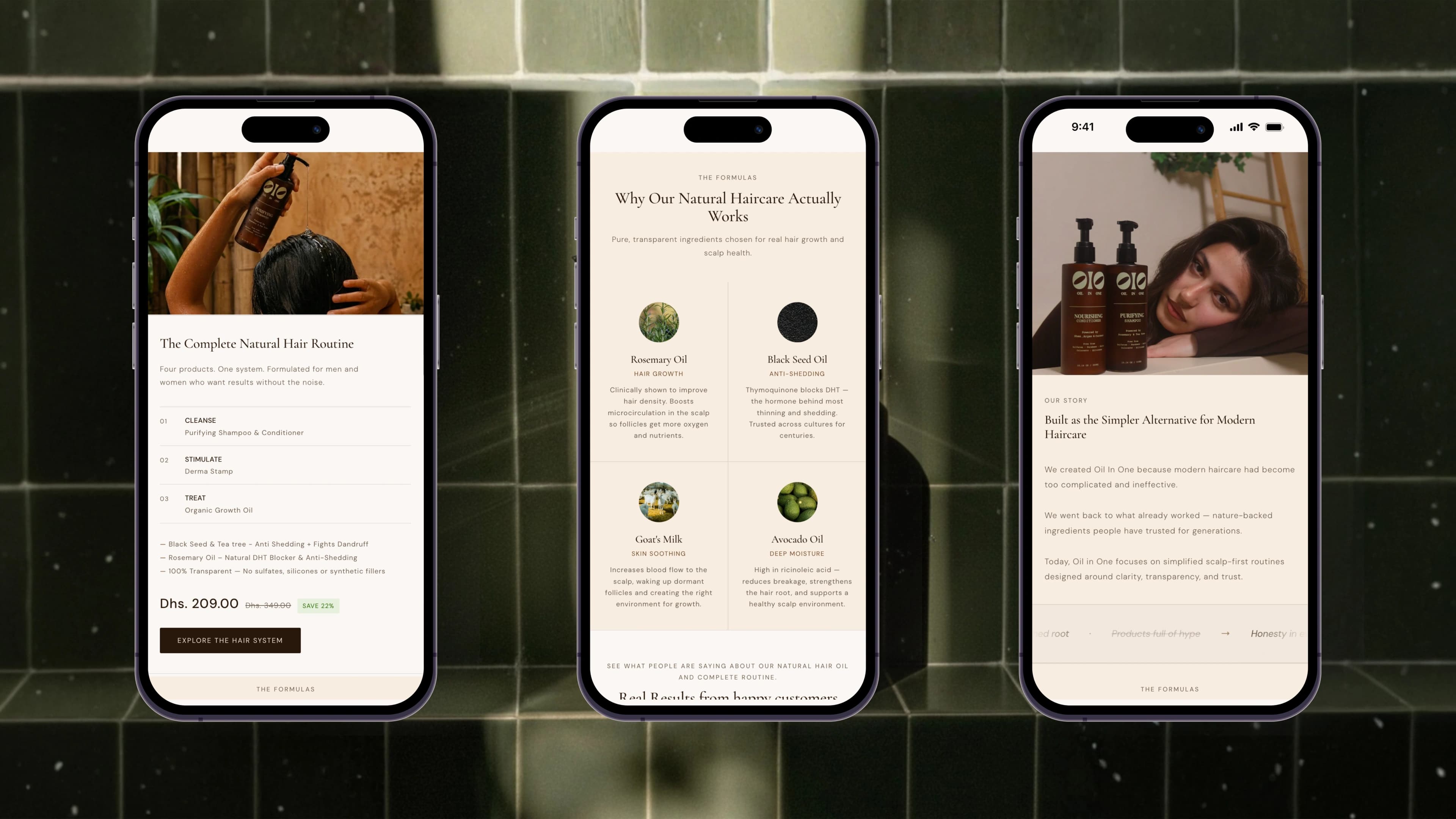
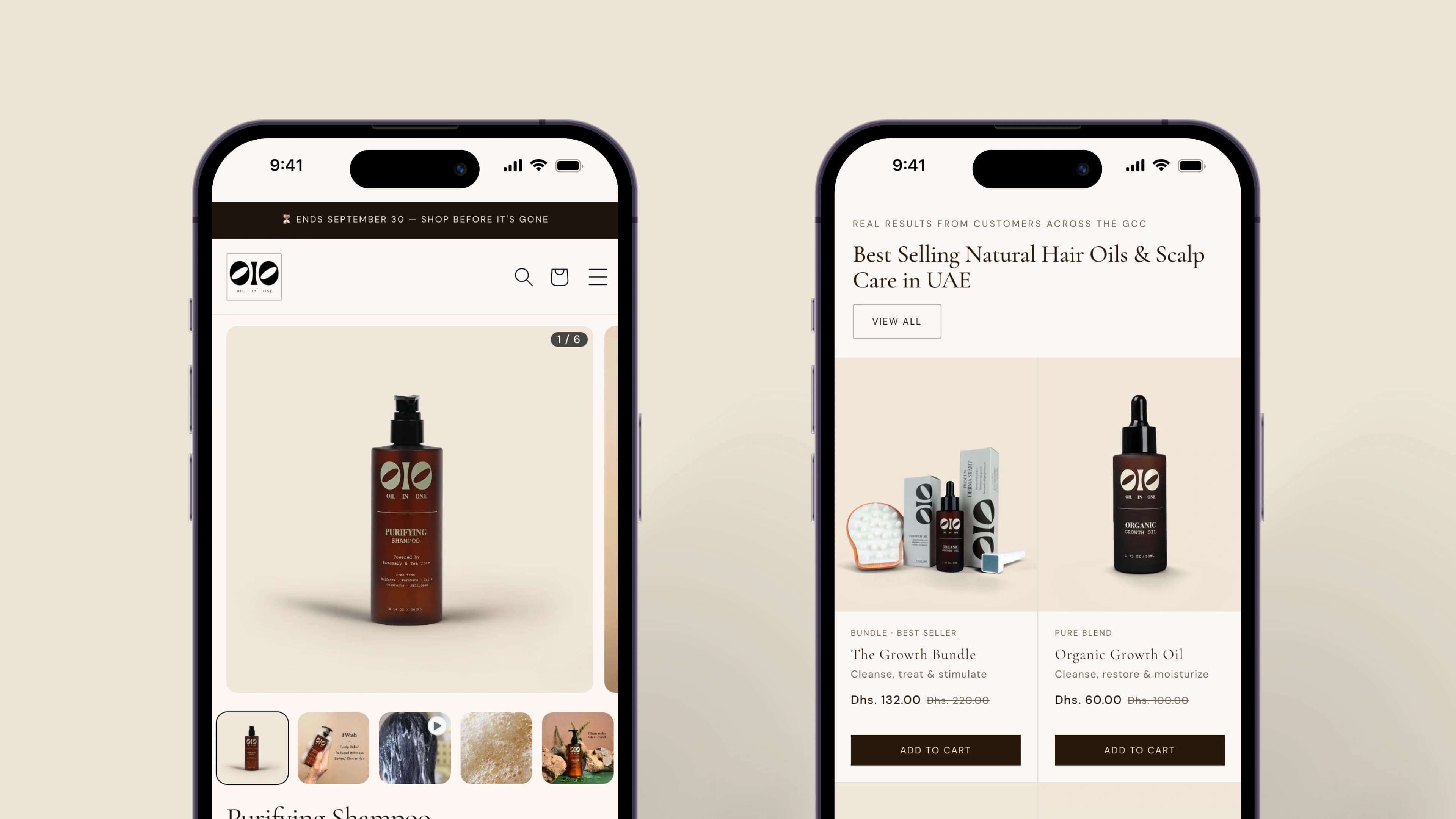
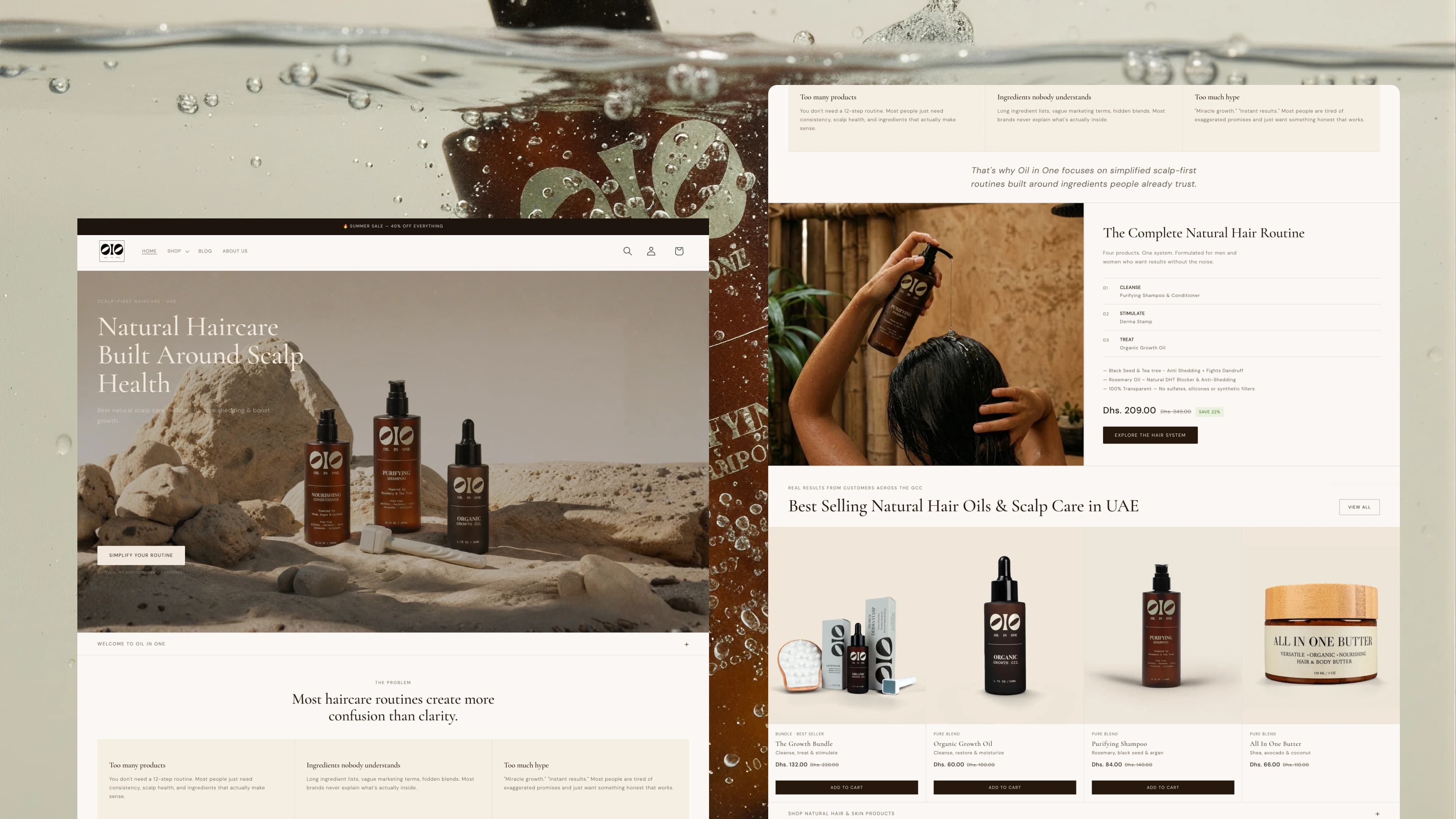
The anti-hype tone carried straight into the design: minimal layouts, clear typography, calm product photography, and graphics that explain the three-step system without the marketing noise. Restraint reads as confidence in a category built on loud claims, and it matches a product whose whole argument is that there's nothing hidden in it.
Structurally the work was turning a one-product store into a range. Separate page types for oils, shampoos and accessories, so a customer can understand what's on offer and where their problem fits, rather than scrolling one flat list.
Then the conversion layer, which is most of what moved the numbers. Clearer routes into product pages, stronger and better-placed calls to action, trust signals where hesitation happens, and a checkout stripped down for mobile with wallet payments they didn't have before. Klaviyo underneath it all: capture pop-ups offering a first-order discount, then automated flows that bring people back to buy again.
Bilingual. Building the store to work in Arabic meant the whole layout system had to mirror. Not just the copy, but the direction of the page, the position of navigation and buttons, and the reading order of every product page. Designing for one language and translating later would have produced a store that technically worked in Arabic and felt wrong to use.
The hardest decision
The restrained direction took several rounds to land. The client was moving upmarket and premium is an easy thing to reach for loudly, so the case for a quieter store had to be made in iterations rather than in one presentation. We worked through versions until the team could see that the calm layouts made the product look more expensive, not less. The photography reshoot followed from that, and it's what made the direction finally read.
After launch we A/B tested the product page rather than assuming we'd got it right. The winning variants are what's live now.
Outcome
Online revenue rose 24% in the first three months. Email-driven revenue lifted 38% after the Klaviyo flows went live. The store averages under 1.5 seconds on mobile and holds a 4.9 rating across 500+ verified reviews. The team runs it themselves.

“Working with BitBurst Studio on oilinone.com was awesome. The site looks great and our customers love how simple it is to browse and buy. The team really cared about the little details that make the experience better.”